

Prevent Heat-Related Illnesses in the Workplace
Outdoor and indoor heat exposure can be dangerous. Every year, dozens of workers die, and thousands become ill while working in hot or humid conditions. Remember: When in doubt, cool the worker and call 911.
Signs and symptoms of heat exhaustion may develop suddenly or over time, especially with prolonged periods of exercise. Possible heat exhaustion signs and symptoms include:
- Cool, moist skin with goose bumps when in the heat
- Heavy sweating
- Faintness
- Dizziness
- Fatigue
- Weak, rapid pulse
- Low blood pressure upon standing
- Muscle cramps
- Nausea
- Headache
If you think you’re experiencing heat exhaustion:
- Stop all activity and rest
- Move to a cooler place
- Drink cool water or sports drinks
- Contact your doctor if your signs or symptoms worsen or if they don’t improve within one hour.
If you are with someone showing signs of heat exhaustion:
- Seek immediate medical attention if they become confused or agitated, lose consciousness, or cannot drink.
- You will need immediate cooling and urgent medical attention if your core body temperature reaches 104 degrees or higher.
What are Heat-Related Illnesses?
Causes of heat exhaustion include exposure to high temperatures, particularly when combined with high humidity, and strenuous physical activity. Employers and workers should become familiar with the symptoms. When any of these symptoms are present, promptly provide first aid. Do not try to diagnose which heat-related illness is occurring. Diagnosis is often difficult because symptoms of multiple types can occur together, and reaction time is of the essence. These conditions can worsen quickly and result in fatalities.
In hot weather, your body cools itself mainly by sweating. The evaporation of your sweat regulates your body temperature. However, when you exercise strenuously or overexert in hot, humid weather, your body is less able to cool itself efficiently.
As a result, your body may develop heat cramps. Symptoms usually include heavy sweating, rapid pulse, fatigue, thirst, and muscle cramps. Prompt treatment such as drinking fluids or sports drinks containing electrolytes, moving to an area with cooler temperatures (such as an air-conditioned or shaded place), and resting are critical to prevent further progressions.
Prevention & Safe Practices
Dangerous heat exposure can occur indoors or outdoors in any season. Employers can take several precautions to keep workers safe by following these simple safety practices when temperatures rise:
- Rest breaks during the hottest parts of the day. If you can’t avoid strenuous activity in hot weather, drink fluids, frequently rest in a cool spot, and schedule exercise or physical labor for cooler parts of the day, such as early morning or evening.
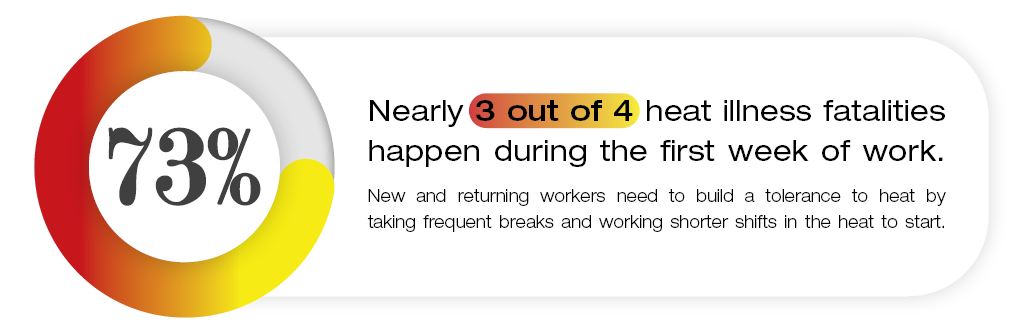
- Get acclimated. Limit time spent working or exercising in heat until you’re conditioned to it. People not used to hot weather are especially susceptible to heat-related illness. It can take several weeks for your body to adjust to hot weather. Follow the 20% Rule — on the 1st day, don’t allow employees to work more than 20% of a shift at full intensity in the heat. Increase their time by no more than 20% a day until they are used to working in the heat.
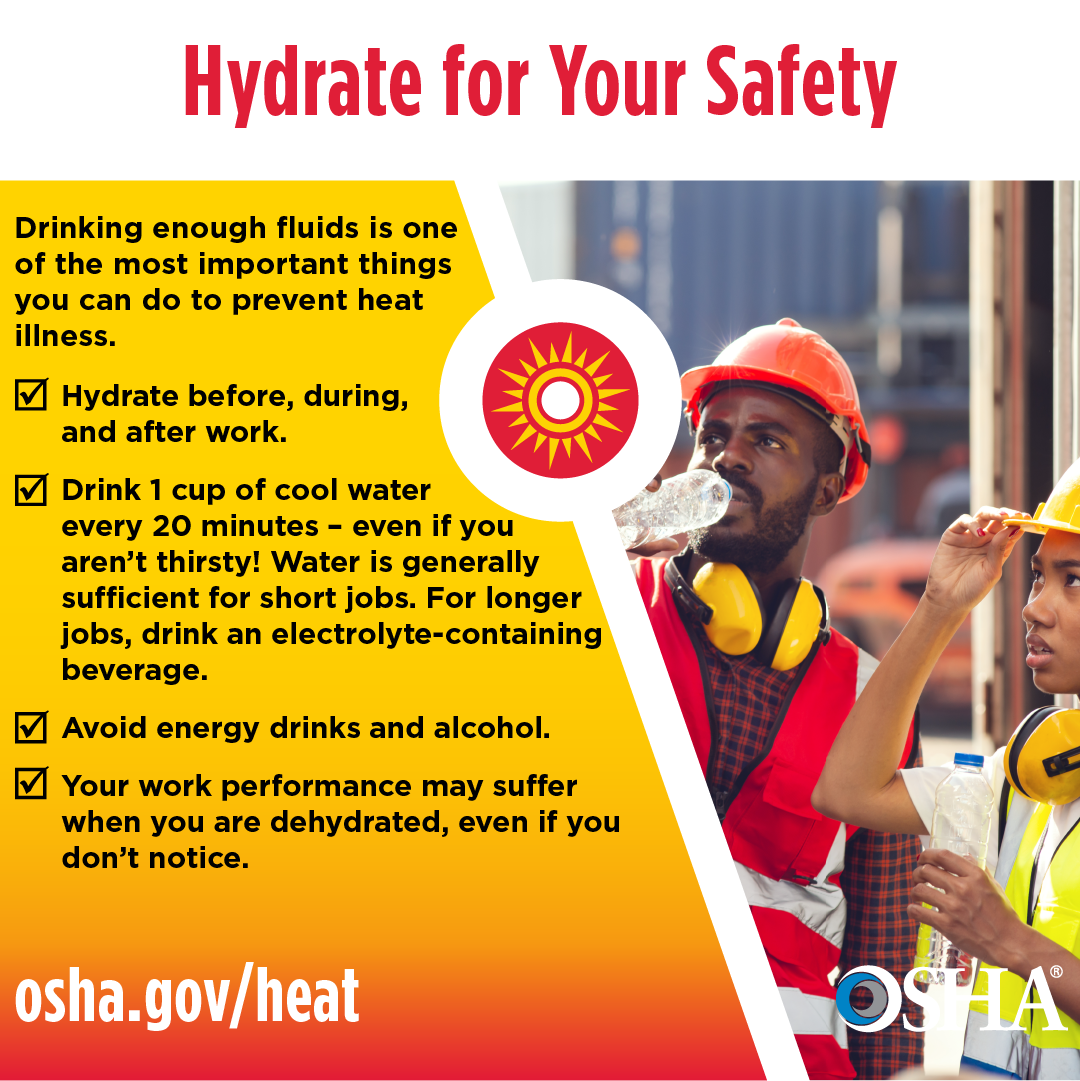
- Hydrate, Hydrate, Hydrate – encourage workers to drink at least one cup of water every 20 minutes, even if they are not thirsty. Staying hydrated will help your body sweat and maintain an average body temperature.
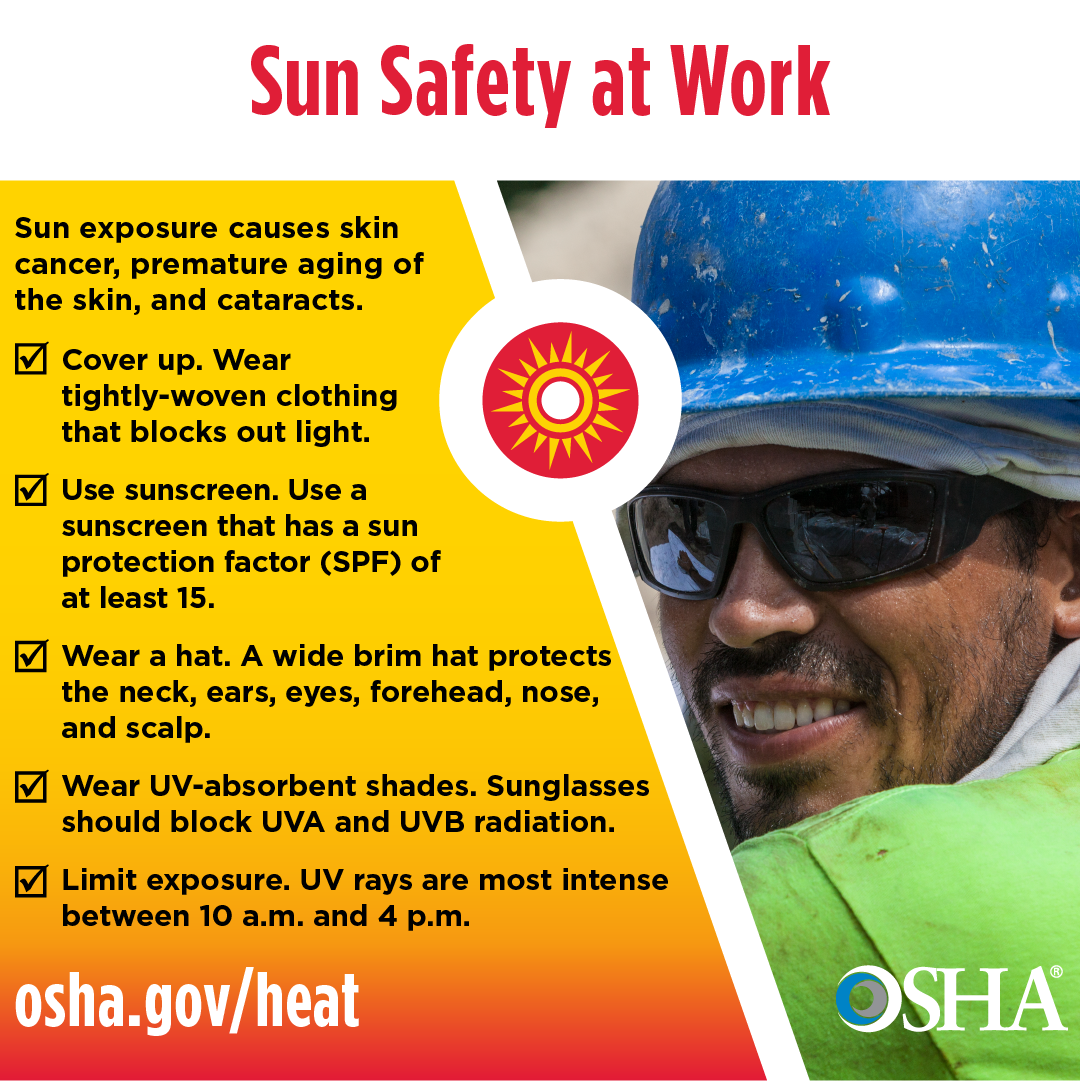
- Dress for the heat — have workers wear a hat and light-colored, loose-fitting, breathable clothing if possible. Wearing excess or tightly fitting clothing will prevent your body from cooling properly.
- Protect against sunburn. Sunburn affects your body’s ability to cool itself, so protect yourself outdoors with a wide-brimmed hat and sunglasses and use a broad-spectrum sunscreen with an SPF of at least 15. Apply sunscreen generously, and reapply every two hours — or more often if you’re swimming or sweating.
- Be cautious if you’re at increased risk. If you take medications or have a condition that increases your risk of heat-related problems, such as a history of previous heat illness, avoid the heat and act quickly if you notice symptoms of overheating. If you participate in a strenuous sporting event or activity in hot weather, make sure medical services are available in case of a heat emergency.
- Never leave anyone in a parked car. This is a common cause of heat-related deaths in children. When parked in the sun, the temperature in your car can rise 20 degrees (more than 11 C) in 10 minutes. It’s not safe to leave a person in a parked car in warm or hot weather, even if the windows are cracked, or the vehicle is in the shade. Keep your car locked when your car is parked to prevent a child from getting inside.
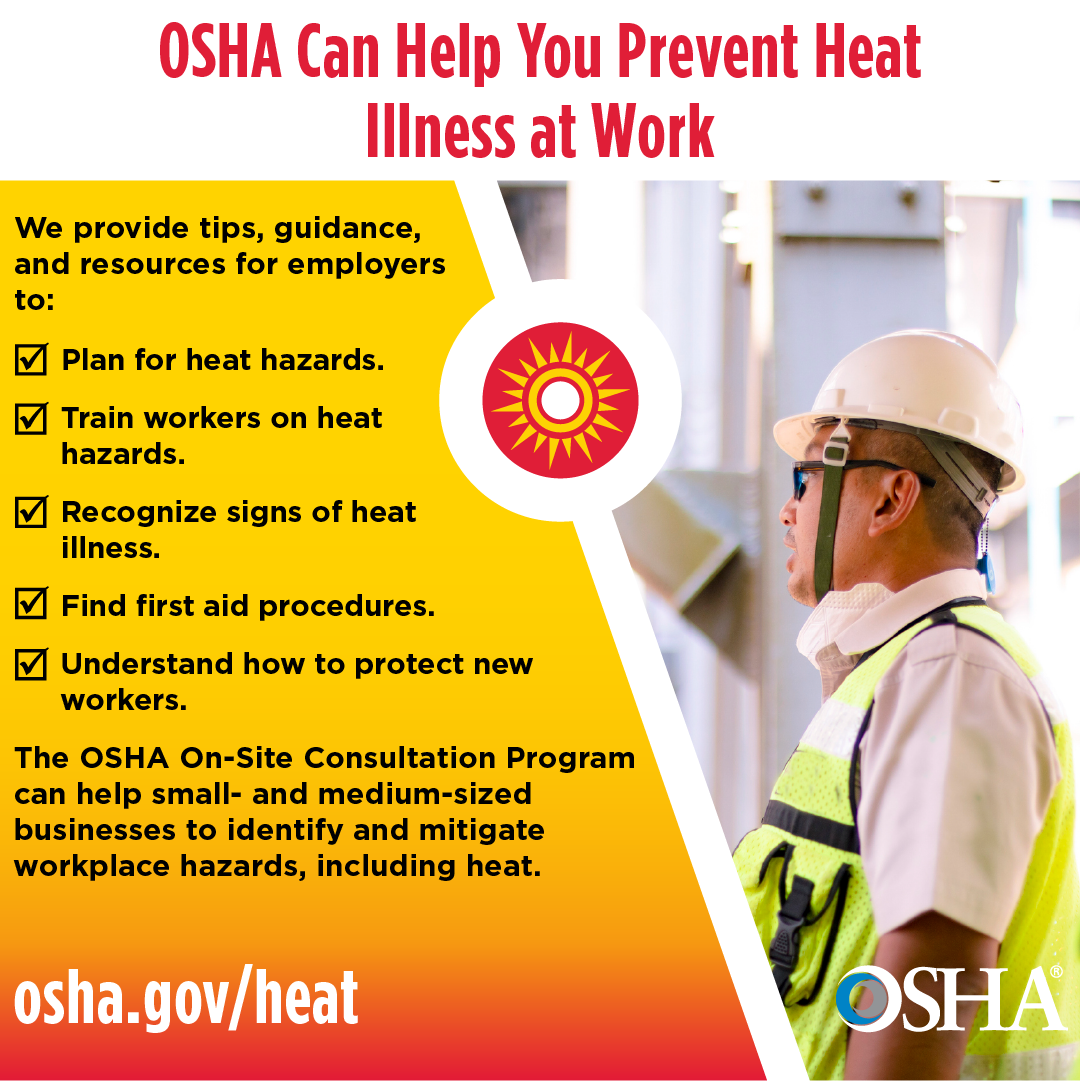
- Offer training on the hazards of heat exposure and how to prevent illness and develop an Emergency Action Plan on what to do if a worker shows signs of heat-related illness.
- Watch out for each other — encourage workers to monitor themselves and others for signs of heat illness. Look for any symptoms of heat illness, including fainting, dizziness, nausea, and muscle spasms, and act quickly — when in doubt, call 911.
ADDITIONAL RESOURCES
https://www.osha.gov/heat-exposure/illness-first-aid
https://www.mayoclinic.org/diseases-conditions/heat-exhaustion/symptoms-causes/syc-20373250
 HART Health On-Site First Aid Services